Mostrando entradas con la etiqueta Jundallah. Mostrar todas las entradas

jueves, 19 de enero de 2012

Grupo salafista suní Jundallah y "La AIEA involucrada en el asesinato de científicos iraníes"

Las "alianzas coyunturales" de Al-Qaeda el Libia con la OTAN ya resultaron sorprendentes, ahora otro organismo internacional, también parece ser que, hace "alianzas coyunturales" con otro grupo de al-qaeda en Beluchistán, el Grupo salafista suní Jundallah implicado en el asesinato del científico irani.

(derecha)Abdelhakim Belhaj líder de al-qaeda y su aliado en Siria Ryad Assaad (izquierda).
_______________________

"La AIEA involucrada en el asesinato de científicos iraníes"

"La Agencia Internacional de Energía Atómica (AIEA) está involucrada en el asesinato selectivo de científicos iraníes", ha denunciado este jueves el expresidente de la Agencia de Energía Atómica Árabe (AEAA), Mahmud Barakat.

"Esta es una política que se repite constantemente. La AIEA está involucrada en el asesinato de los científicos nucleares iraníes, ya que es la única entidad que posee informaciones precisas y confidenciales en este sentido", agregó Barakat.

En una entrevista concedida a Nile TV, Barakat ha señalado que si "Irán no da información a la agencia se crea un escándalo, y acusan a Irán de no ser transparente al respecto, y si da información, se realizan los asesinatos selectivos", informa IRIB.

Asimismo, el político explicó que el programa nuclear de Irán con fines pacíficos pretende satisfacer las demandas internas del país; asimismo, el uso de la energía atómica es una necesidad permanente para un país que ha gastado mil millones de dólares en la construcción de instalaciones nucleares.

Barakat criticó el doble rasero de Washington sobre el programa pacífico nuclear de Irán, agregando que Estados Unidos y el régimen israelí, ellos si poseen un sinnúmero de armas nucleares.

Teherán sostiene que como miembro de la AIEA y país signatario del Tratado de No Proliferación Nuclear (TNP), tiene el derecho de utilizar la tecnología nuclear para usos pacíficos como la generación de electricidad e investigación médica. 

Mientras tanto, el régimen israelí, poseedor de más de 200 ojivas atómicas, no permite que la AIEA inspeccione o supervise su controvertido programa nuclear, amén de hacer oídos sordos a la demanda de adherirse al TNP.

El 11 de enero del año en curso, el catedrático iraní, Mostafa Ahmadi Roshan, fue asesinado en Teherán, la capital de Irán, tras explotar la bomba lapa colocada en su coche.

Ahmadi Roshan, es el cuarto científico iraní, vinculado con el programa nuclear pacífico iraní que ha sido asesinado durante los últimos dos años. Dariush Rezainejad (julio de 2011), Masud Ali Mohammadi (enero de 2010) y Mayid Shahriari (noviembre de 2010) perdieron la vida en atentados similares, mientras que Fereydun Abasi (noviembre de 2010) sufrió heridas.

mp/rh/msf/.hispantv

lunes, 16 de enero de 2012

Grupo salafista suní Jundallah. Los socios del Mossad en Irán

El asesinato del cuarto científico nuclear en Teherán vuelve a plantear quién está detrás de los ataques contra el régimen iraní y, sobre todo, si EEUU o Israel han declarado una guerra secreta para sabotear el programa nuclear. La revista Foreign Policy publica un amplio reportaje, citando fuentes de la CIA y otros servicios de inteligencia, que señala al Mossad por su relación con el grupo salafista suní Jundallah.

Los norteamericanos descubrieron alarmados durante los últimos años de la Administración de Bush que los agentes israelíes se hacían pasar por espías norteamericanos al entablar contactos con representantes de Jundallah, muchos de ellos celebrados en Londres. Por su ideología salafista, es de suponer que los miembros de este grupo armado tendrían algunos inconvenientes en recibir ayuda del Mossad. ‘Disfrazarse’ de agentes de la CIA solventaba esa dificultad.

Cuando los servicios de inteligencia norteamericanos se enteraron no daban crédito. Eso implicaba a EEUU en el apoyo a un grupo armado que había cometido atentados contra objetivos militares iraníes, pero también contra civiles, por ejemplo en mezquitas chiíes. La Casa Blanca pidió explicaciones a la CIA y, tras conocer la respuesta, Bush se enfureció, según el artículo. El Mossad operaba en la más absoluta impunidad sin importarle lo que pensara su mejor aliado (no es una novedad, el Mossad también trabaja dentro de EEUU).

“No nos dedicamos a asesinar a altos cargos iraníes o a matar civiles iraníes”, dice una fuente de inteligencia. A diferencia del Mossad, podría haber añadido.

“This certainly isn’t the first time this has happened, though it’s the worst case I’ve heard of,” former Centcom chief and retired Gen. Joe Hoar said of the Israeli operation upon being informed of it. “But while false-flag operations are hardly new, they’re extremely dangerous. You’re basically using your friendship with an ally for your own purposes. Israel is playing with fire. It gets us involved in their covert war, whether we want to be involved or not.”

No importa lo furiosos que estuvieran en la CIA. Nunca hay consecuencias cuando la política israelí perjudica los intereses de Washington. Nadie se atreve a denunciarlo públicamente. Al igual que con la eliminación de un dirigente de Hamás en Dubai, en la que se usaron pasaportes falsos de países europeos, ser aliado de Israel obliga aparentemente a tragar con eso y mucho más.

Jundallah, fundada en 2003, no es un nombre que aparezca mucho en los medios de comunicación. Eso no quiere decir que sea un completo misterio. Ya en 2007 y 2008 se sospechaba que recibía ayuda de EEUU. Por entonces no figuraba en la lista de organizaciones terroristas elaborada por el Departamento de Estado, que esperó hasta noviembre de 2010 para corregir esa extraña omisión. El cambio se produjo pocos meses después de un atentado contra la mezquita chií de Zahedan en el que murieron 27 personas y 169 quedaron heridas.

Como organización radical suní, Jundallah no cuenta con muchos apoyos entre la mayoría chií del país. Dice luchar contra la discriminación que sufren los suníes, que son cerca del 10% de la población total pero un porcentaje mucho mayor en la provincia de Sistán y Baluchistán, fronteriza con Pakistán y Afganistán (mapa). Irán ha acusado también al servicio de inteligencia paquistaní de financiar y armar a Jundallah, al igual que hace con los grupos yihadistas que operan en Afganistán o Cachemira.

Los contactos del Mossad con Jundallah confirman que los israelíes están dispuestos a aliarse con el diablo para acabar con el programa nuclear iraní. No les importa dar patadas en un avispero ni implicar a EEUU, lo que hace sospechar que estarían encantados de arrastrar a Washington a un conflicto bélico con Irán.

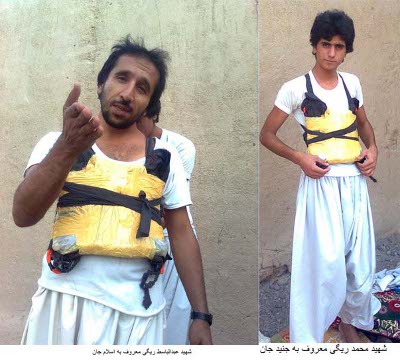
Foto: Dos miembros de un comando suicida de Jundallah fotografiados antes del atentado de julio de 2010 contra una mezquita.

Una entrevista en Al Jazeera English con Mark Perry, autor del reportaje de Foreign Policy.

Según la web israelí DEBKAfile, que basa sus informaciones en fuentes anónimas de los servicios de inteligencia israelíes, Obama llamó por teléfono a Netanyahu el jueves para criticar con dureza el asesinato del científico iraní. El artículo relaciona el reportaje de Foreign Policy con un intento norteamericano de distanciarse de Israel en el conflicto con Irán.

http://www.guerraeterna.com/los-socios-del-mossad-en-iran/

sábado, 14 de enero de 2012

False flag. A series of CIA memos describes how Israeli Mossad agents posed as American spies to recruit members of the terrorist

A series of CIA memos describes how Israeli Mossad agents posed as American spies to recruit members of the terrorist organization Jundallah to fight their covert war against Iran.

Buried deep in the archives of America's intelligence services are a series of memos, written during the last years of President George W. Bush's administration, that describe how Israeli Mossad officers recruited operatives belonging to the terrorist group Jundallah by passing themselves off as American agents. According to two U.S. intelligence officials, the Israelis, flush with American dollars and toting U.S. passports, posed as CIA officers in recruiting Jundallah operatives -- what is commonly referred to as a "false flag" operation.


The memos, as described by the sources, one of whom has read them and another who is intimately familiar with the case, investigated and debunked reports from 2007 and 2008 accusing the CIA, at the direction of the White House, of covertly supporting Jundallah -- a Pakistan-based Sunni extremist organization. Jundallah, according tothe U.S. government and published reports, is responsible for assassinating Iranian government officials and killing Iranian women and children.

But while the memos show that the United States had barred even the most incidental contact with Jundallah, according to both intelligence officers, the same was not true for Israel's Mossad. The memos also detail CIA field reports saying that Israel's recruiting activities occurred under the nose of U.S. intelligence officers, most notably in London, the capital of one of Israel's ostensible allies, where Mossad officers posing as CIA operatives met with Jundallah officials.

The officials did not know whether the Israeli program to recruit and use Jundallah is ongoing. Nevertheless, they were stunned by the brazenness of the Mossad's efforts.

"It's amazing what the Israelis thought they could get away with," the intelligence officer said. "Their recruitment activities were nearly in the open. They apparently didn't give a damn what we thought."

Interviews with six currently serving or recently retired intelligence officers over the last 18 months have helped to fill in the blanks of the Israeli false-flag operation. In addition to the two currently serving U.S. intelligence officers, the existence of the Israeli false-flag operation was confirmed to me by four retired intelligence officers who have served in the CIA or have monitored Israeli intelligence operations from senior positions inside the U.S. government.

The CIA and the White House were both asked for comment on this story. By the time this story went to press, they had not responded. The Israeli intelligence services -- the Mossad -- were also contacted, in writing and by telephone, but failed to respond. As a policy, Israel does not confirm or deny its involvement in intelligence operations.

There is no denying that there is a covert, bloody, and ongoing campaign aimed at stopping Iran's nuclear program, though no evidence has emerged connecting recent acts of sabotage and killings inside Iran to Jundallah. Many reports have cited Israel as the architect of this covert campaign, which claimed its latest victim on Jan. 11 when a motorcyclist in Tehran slipped a magnetic explosive device under the car of Mostafa Ahmadi Roshan, a young Iranian nuclear scientist. The explosion killed Roshan, making him the fourth scientist assassinated in the past two years. The United States adamantly denies it is behind these killings.

According to one retired CIA officer, information about the false-flag operation was reported up the U.S. intelligence chain of command. It reached CIA Director of Operations Stephen Kappes, his deputy Michael Sulick, and the head of the Counterintelligence Center. All three of these officials are now retired. The Counterintelligence Center, according to its website, is tasked with investigating "threats posed by foreign intelligence services."

The report then made its way to the White House, according to the currently serving U.S. intelligence officer. The officer said that Bush "went absolutely ballistic" when briefed on its contents.

"The report sparked White House concerns that Israel's program was putting Americans at risk," the intelligence officer told me. "There's no question that the U.S. has cooperated with Israel in intelligence-gathering operations against the Iranians, but this was different. No matter what anyone thinks, we're not in the business of assassinating Iranian officials or killing Iranian civilians."

Israel's relationship with Jundallah continued to roil the Bush administration until the day it left office, this same intelligence officer noted. Israel's activities jeopardized the administration's fragile relationship with Pakistan, which was coming under intense pressure from Iran to crack down on Jundallah. It also undermined U.S. claims that it would never fight terror with terror, and invited attacks in kind on U.S. personnel.

"It's easy to understand why Bush was so angry," a former intelligence officer said. "After all, it's hard to engage with a foreign government if they're convinced you're killing their people. Once you start doing that, they feel they can do the same."

A senior administration official vowed to "take the gloves off" with Israel, according to a U.S. intelligence officer. But the United States did nothing -- a result that the officer attributed to "political and bureaucratic inertia."

"In the end," the officer noted, "it was just easier to do nothing than to, you know, rock the boat." Even so, at least for a short time, this same officer noted, the Mossad operation sparked a divisive debate among Bush's national security team, pitting those who wondered "just whose side these guys [in Israel] are on" against those who argued that "the enemy of my enemy is my friend."

The debate over Jundallah was resolved only after Bush left office when, within his first weeks as president, Barack Obama drastically scaled back joint U.S.-Israel intelligence programs targeting Iran, according to multiple serving and retired officers.

The decision was controversial inside the CIA, where officials were forced to shut down "some key intelligence-gathering operations," a recently retired CIA officer confirmed. This action was followed in November 2010 by the State Department's addition of Jundallah to its list of foreign terrorist organizations -- a decision that one former CIA officer called "an absolute no-brainer."

Since Obama's initial order, U.S. intelligence services have received clearance to cooperate with Israel on a number of classified intelligence-gathering operations focused on Iran's nuclear program, according to a currently serving officer. These operations are highly technical in nature and do not involve covert actions targeting Iran's infrastructure or political or military leadership.

"We don't do bang and boom," a recently retired intelligence officer said. "And we don't do political assassinations."

Israel regularly proposes conducting covert operations targeting Iranians, but is just as regularly shut down, according to retired and current intelligence officers. "They come into the room and spread out their plans, and we just shake our heads," one highly placed intelligence source said, "and we say to them -- 'Don't even go there. The answer is no.'"

Unlike the Mujahedin-e Khalq, the controversial exiled Iranian terrorist group that seeks the overthrow of the Tehran regime and is supported by former leading U.S. policymakers, Jundallah is relatively unknown -- but just as violent. In May 2009, a Jundallah suicide bomber blew himself up inside a mosque in Zahedan, the capital of Iran's southeastern Sistan-Baluchistan province bordering Pakistan, during a Shiite religious festival. The bombing killed 25 Iranians and wounded scores of others.

The attack enraged Tehran, which traced the perpetrators to a cell operating in Pakistan. The Iranian government notified the Pakistanis of the Jundallah threat and urged them to break up the movement's bases along the Iranian-Pakistani border. The Pakistanis reacted sluggishly in the border areas, feeding Tehran's suspicions that Jundallah was protected by Pakistan's intelligence services.

The 2009 attack was just one in a long line of terrorist attacks attributed to the organization. In August 2007, Jundallah kidnapped 21 Iranian truck drivers. In December 2008, it captured and executed 16 Iranian border guards -- the gruesome killings were filmed, in a stark echo of the decapitation of American businessman Nick Berg in Iraq at the hands of al Qaeda's Abu Musab al-Zarqawi. In July 2010, Jundallah conducted a twin suicide bombing in Zahedan outside a mosque, killing dozens of people, including members of the Islamic Revolutionary Guard Corps.

The State Department aggressively denies that the U.S. government had or has any ties to Jundallah. "We have repeatedly stated, and reiterate again that the United States has not provided support to Jundallah," a spokesman wrote in an email to the Wall Street Journal, following Jundallah's designation as a terrorist organization. "The United States does not sponsor any form of terrorism. We will continue to work with the international community to curtail support for terrorist organizations and prevent violence against innocent civilians. We have also encouraged other governments to take comparable actions against Jundallah."

A spate of stories in 2007 and 2008, including a report by ABC News and a New Yorker article, suggested that the United States was offering covert support to Jundallah. The issue has now returned to the spotlight with the string of assassinations of Iranian nuclear scientists and has outraged serving and retired intelligence officers who fear that Israeli operations are endangering American lives.

"This certainly isn't the first time this has happened, though it's the worst case I've heard of," former Centcom chief and retired Gen. Joe Hoar said of the Israeli operation upon being informed of it. "But while false-flag operations are hardly new, they're extremely dangerous. You're basically using your friendship with an ally for your own purposes. Israel is playing with fire. It gets us involved in their covert war, whether we want to be involved or not."

The Israeli operation left a number of recently retired CIA officers sputtering in frustration. "It's going to be pretty hard for the U.S. to distance itself from an Israeli attack on Iran with this kind of thing going on," one of them told me.

Jundallah head Abdolmalek Rigi was captured by Iran in February 2010. Although initial reports claimed that he was captured by the Iranians after taking a flight from Dubai to Kyrgyzstan, a retired intelligence officer with knowledge of the incident told me that Rigi was detained by Pakistani intelligence officers in Pakistan. The officer said that Rigi was turned over to the Iranians after the Pakistani government informed the United States that it planned to do so. The United States, this officer said, did not raise objections to the Pakistani decision.

Iran, meanwhile, has consistently claimed that Rigi was snatched from under the eyes of the CIA, which it alleges supported him. "It doesn't matter," the former intelligence officer said of Iran's charges. "It doesn't matter what they say. They know the truth."

Rigi was interrogated, tried, and convicted by the Iranians and hanged on June 20, 2010. Prior to his execution, Rigi claimed in an interview with Iranian media -- which has to be assumed was under duress -- that he had doubts about U.S. sponsorship of Jundallah. He recounted an alleged meeting with "NATO officials" in Morocco in 2007 that raised his suspicions. "When we thought about it we came to the conclusion that they are either Americans acting under NATO cover or Israelis," he said.

While many of the details of Israel's involvement with Jundallah are now known, many others still remain a mystery -- and are likely to remain so. The CIA memos of the incident have been "blue bordered," meaning that they were circulated to senior levels of the broader U.S. intelligence community as well as senior State Department officials.

What has become crystal clear, however, is the level of anger among senior intelligence officials about Israel's actions. "This was stupid and dangerous," the intelligence official who first told me about the operation said. "Israel is supposed to be working with us, not against us. If they want to shed blood, it would help a lot if it was their blood and not ours. You know, they're supposed to be a strategic asset. Well, guess what? There are a lot of people now, important people, who just don't think that's true."

http://www.foreignpolicy.com/articles/2012/01/13/false_flag
El Mossad se hizo pasar por la CIA para reclutar terroristas

Unos agentes de la inteligencia israelí, el Mossad, se hicieron pasar por espías de la CIA para llevar a cabo asesinatos y ataques contra el Gobierno de Irán. De este modo, el servicio especial israelí trataba de reclutar a miembros del grupo terrorista pakistaní Jundallah, según informa la revista Foreign Policy. El boletín se basa en varios memorandos de la agencia estadounidense de los años 2007 y 2008.

Jundallah, una organización extremista suní, ya era conocida por haber perpetrado ataques contra Irán asesinando a varios miembros del Gobierno del país. Para conseguir el reclutamiento de esos terroristas, los agentes del Mossad usaron dólares y pasaportes estadounidenses falsos para hacerse pasar por espías de la CIA. Según la revista, el proceso de reclutamiento tuvo lugar principalmente en Londres, sin que se tomaran especiales medidas de seguridad para ocultarlo, lo que demuestra su falta de preocupación al respecto de la opinión de EE. UU.

La reacción de EE. UU.

El informe de la revista afirma que la administración de EE. UU., encabezada entonces por George W. Bush, no sabía nada de la operación y que el ex presidente se enfureció tras enterarse de la historia. Según un funcionario que está actualmente trabajando en la inteligencia estadounidense, cuando Bush fue informado sobre esto "estaba que se subía por las paredes".

"No hay duda de que Estados Unidos ha cooperado con Israel en operaciones de inteligencia contra iraníes, pero esto era diferente. No importa lo que se piense, no estamos en el negocio de asesinar a políticos o civiles iraníes", manifiesta la misma fuente.

El Departamento de Estado estadounidense ha negado más de una vez cualquier vínculo con el grupo terrorista Jundallah. Sin embargo, esta operación israelí puso en peligro la frágil relación del Gobierno estadounidense con Pakistán.

Pese a toda su indignación, Washington no impuso sanción alguna a Israel. Los debates sobre la situación concluyeron con la decisión del mandatario actual, Barack Obama, de aumentar la cantidad de programas conjuntos contra Irán.

Articulo completo en: http://actualidad.rt.com/actualidad/internacional/issue_34828.html

domingo, 12 de junio de 2011

Jundallah emite vídeo "Plumas de los fans del Sheikh Osama bin Laden"

Este video está dividido en cuatro partes y protegido por contraseña.
El video, contraseña y servidores de descarga, están disponibles en la web http://muslm.net/vb/showthread.php?t=439924 (Administrada por la inteligencia de Arabia Saudita)

sábado, 24 de julio de 2010

Jundallah: Iran's Sunni rebels. Group has claimed responsibility for several deadly attacks in the country's southeast.

Jundallah claimed responsibility for an attack which killed 42 people in October, 2009 [EPA]

The Sunni Muslim group Jundallah (Soldiers of God) has claimed responsibility for several deadly attacks in Iran's southeastern province of Sistan-Baluchestan.

It was founded in 2002 and launched its armed campaign in 2005.

An Iranian court said in June that Jundallah was responsible for the killing of at least 154 security personnel and civilians.

The group is believed to number fewer than 1,000 fighters armed with explosives and small weapons in Sistan-Baluchestan which borders both Pakistan and Afghanistan.

Abdulmalek Rigi, Jundallah's slain leader, said in a 2007 interview that his group was fighting for the rights of the Baluch people, facing what he called "genocide" in Iran, but denied it promoted any separatist or radical sectarian agenda.

Rigi vowed to fight the Shia government in Iran unless economic conditions improve in the province.

The group has carried out kidnappings and, more recently, suicide attacks.

'Foreigners involved'

Iran has claimed that Jundallah has links to the al-Qaeda network.

It has also accused the United States, the United Kingdom and Pakistan of backing the fighters in order to create instability in the country.

In depth

Video: Iran's Guards under attack
Focus: Sistan-Baluchestan

A court statement released upon the execution of Rigi on June 19 said Jundallah was "linked to members of foreign intelligence services, including members from US and Zionist regime's intelligence services under the cover of Nato."

Rigi was arrested in February after Iranian warplanes forced the flight he was on from Dubai to Kyrgyzstan to land at an Iranian airport.

After his arrest, Rigi said on state-run TV that Iranian authorities had detained him on his way to a meeting with a "high-ranking American person" in Kyrgyzstan.

US officials have described the allegations as baseless Iranian propaganda.

"They [Americans] said they would co-operate with us and will give me military equipment," Rigi said in Farsi in the prerecorded television statement.

Rigi was hanged in Tehran after the court said he had "ordered 15 armed abductions, confessed to three murders, ordered the murders of tens of citizens, police and military personnel through bombings and armed actions."

More than 20 men, including Rigi's brother, have been executed this year accused of involvement with Jundallah.

Main attacks blamed on Jundallah:

October 18, 2009: In the deadliest attack in Iran since the 1980s, a bombing kills 40 people. Fifteen Revolutionary Guards members were among those killed. Jundallah claims responsibility.

May 28, 2009: A suicide bomber kills 25 people and injures more than 120 in an attack on a mosque in Zahedan, the capital of Sistan-Baluchestan. Jundallah claimed responsibility for the attack.

December, 2008: Abdul-Ghafoor Rigi, a brother of the group's leader, carries out a suicide attack in Saravan on a security forces headquarters.

February 14, 2007: Eleven members of the Revolutionary Guards are killed in an attack on a bus in the city of Zahedan. Jundallah claims responsibility for this and several other attacks the same year.

December 14, 2005: An assassination attempt is carried out against Mahmoud Ahmadinejad, the president, while on a visit to Sistan- Baluchistan.

June, 2005: Shahab Mansuri, a Revolutionary Guard officer, is kidnapped and killed a month later.

http://www.aljazeera.com/news/middleeast/2010/06/201062074140996374.html

sábado, 17 de julio de 2010

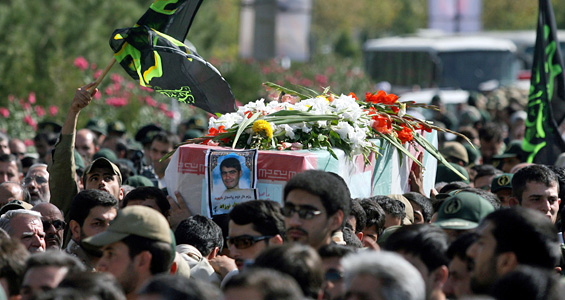
Los jihadistas rinden tributo a los dos suicidas de Jundallah

Los foros mas radicales han comenzado ha rendirles tributo a éstos dos suicidas que murieron en el ataque a la Gran Mezquita de Zahedán.

La foto primera es la captura de pantalla del de la web sucesora de al-ekklas, todos sabemos que era propiedad de los servicios de inteligencia sauditas y americanos. Como no podía ser de otra manera....éstos dos suicidas son exactamente iguales que los del 11-S o los que atacan a las tropas de la OTAN.

Por mi, pueden crecer como las setas, ya sabemos que el riego y el abono para que crezca ésta planta, corre a cargo de EEUU y sus aliados sauditas.

Algún día los americanos descubriran que el 11-S NO FUE UN ERROR DE LA CIA. SIC
Palabras pronunciada por un agente de la CIA.

El gran problema, el mayor enemigo al que se enfrentan los ciudadanos occidentales es A SU IGNORANCIA. Un pueblo ignorante es facilmente manipulable, es la desgracia del analfabeto.

PD. Respuesta al lector que ha preguntado ¿A quién o quienes te refieres cuando dices: “otros productores de corcho-Alcornoque-”.?

Me refería al desgraciado ignorante que reniega de su ADN de hace VIII siglos y que en la actualidad conserva los "rasgos morfológicos de sus antepasado musulmanes en Alandalus“, éste impresentable se atrevió llamarme membrillo conspiranoico, mordió a la lima, que se come el hierro....
Yo de él, me hacia la cirugía plástica, no sea que lo confundan con el lugarteniente de bin Laden y lo manden a Guantánamo, antes de darle tiempo a sacar el pasaporte.

viernes, 16 de julio de 2010

Al-Qaeda en Iran -Jundullah- reivindica el ataque en la Gran Mezquita de Zahedán

Jundullah está vinculado a los servicios secretos de EEUU y Gran Bretaña.
Este doble atentado terrorista que se produjo en la ciudad de Zahedán. Los informes hablan de 21muertos y más de 100 heridos.

Este es el comunicado oficial emitido por Jundullah, han cometido un error que nos da la razón a los investigadores, observadores o analistas que no tenemos amos... como “otros productores de corcho-Alcornoque-”.

Descubran donde está la prueba determinante. Si no la encuentran, desgraciadamente se debe, a que no saben leer Los leones del Magreb Islámico.
A partir de ahora Al-Qaeda en el Magreb Islámico ¿Hay que llamarla "grupo de insurgentes..."?

29 de mayo de 2009
Soldados de Dios - Jundullah terroristas islámicos apoyados por la Cia- reivindican el atentado en Irán

lunes, 19 de octubre de 2009

Video de Jundallah

Voy a dejar éste video para que puedan ver como EEUU sigue siendo aliado de grupos jihadistas o de al-qaeda, luego nos cuentan milongas o chachadas.

Jundallah emite comunicado oficial reivindicándo el atentado en Irán

Este es el documento oficial que ha emitido Jundallah (soldados de Alá) para reivindicar el atentado de ayer domingo 18 de octunre 2009, está firmado por:
Movimiento de Resistencia Popular de Irán Jundallah
29 de octubre de 1430, correspondiente a 18 octubre 2009.
Como se ve, está escrito en árabe, un árabe que no corresponde a un nativo, está escrito en la forma y norma que lo esribe quien lo aprendió y su lengua materna es el inglés.
Contiene varios errores de muy dificil justificación.
Bueno es saber que los ataques suicidas son "actos de Resistencia para unos y terrorismo para otros...".
Obama se ha apresurado a condenar el ataque terrorista y desmentir que ellos estén detrás...
¿Desde cuando un presidente de EEUU se ve obligado a desmentir un acto terrorista...?...Me parece a mi Sr. Obama,...que se la han jugado a usted desde "los sotanos de la Casa Blanca"